This blog is for you – if there’s a nutrition or wellbeing topic you’d like me to cover, please get in touch.

“Gut Instinct” and the GUT-BRAIN axis
Ever get that feeling in a situation, maybe entering a building or listening to someone talk, that something is right or wrong? Sometimes we can feel that way, without being able to explain the reasons for our judgement.
Gut instincts are often described as our “sixth sense”✨
“Gut instinct” comes from an ancient belief that emotions are located in the stomach.
The GUT-BRAIN axis = two-directional communication channel between the brain and the gut, involving gut microorganisms. Much scientific research continues to explore role of gut-brain axis and its influence on mental health, neurological conditions and stress.
Research has found the gut-brain connection to influence:
🔹 intestinal activities
🔹 functional immune effector cells (specialised immune system cells ready to ‘attack’ or ‘clean up’)
🔹 mood
🔹 cognition
🔹 mental health
All good reasons to tune-in, listen and invest into our gut health.
Sources:
🎓 Appleton (2018) ‘The Gut-Brain Axis: Influence of Microbiota on Mood and Mental Health’. Integrative Medicine journal 17:4
🎓 Robson (2022) ‘Intuition: When is it right to trust your gut instincts?’ BBC
🎓 Nord (2024) ‘There’s a Reason They’re Called ‘Gut’ Feelings’ TIME magazine, Ideas: Health.
____________________________________________________________

Your gut and your sleep 💤🛌
Did you know it’s not just people who have a natural sleep cycle (circadian rhythm = your body’s 24hr cycle) – all living things do and that includes the bacteria in your micro biome.
When you have irregular sleep (late nights, travel, kids!!) your internal body clock is thrown off and this affects how you process food, potentially contributing to obesity.
2/5 workers in US are shift workers (working during normal sleep hours) + this coincidentally is roughly same rate as obesity in the US.
If a shift worker and non-shift worker eat exactly the same diet, they metabolise differently.
Sleep disrupting foods:
✖️alcohol
✖️caffeine
Foods that help with sleep include:
– omega3s: oily fish, flaxseeds, walnuts, chia seeds, soybean, edamame
– chamomile: in tea
– melatonin: eggs, fish, milk, rice, barley, rolled oats, pistachios, walnuts, seeds, sunflower seeds, broccoli, cucumber
– tryptophan: pumpkin, squash seeds, cooked tuna, roasted soybeans
– l-ornithine: in complete protein sources such as meat, poultry, fish, soybeans, quinoa
If regularly fatigued please see a doctor to investigate other possible root causes🩺
____________________________________________________________
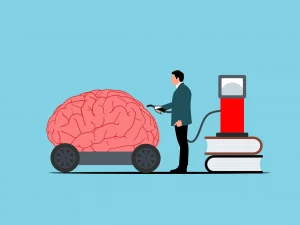
Top 5 BRAIN-POWER foods 🏋️♀️
Heard the saying ‘you are what you eat?’. There are some well-researched foods that boost brainpower and they’re great for your gut too.
Most importantly a healthy balanced diet is needed.
Food that protects your heart and blood vessels are the same as the ones that are best for your brain-power and slowing cognitive decline.
The TOP 5 for brain-power researched by Harvard Health:
1. Green leafy veg: kale spinach, broccoli. Important nutrients include Vitamin K (important for blood clotting and bone health), lutein (natural antioxidant), folate/Vitamin B9 (helps make red blood cells), beta-carotene (antioxidant, among other things)
➡️ eat them every day
2. Fatty fish: brilliant source of omega-3 fatty acids.
➡️ eat at least twice a week, ideally low in mercury varieties such as salmon, cod and canned light tuna
3. Berries: rich in flavonoids that are anti inflammatory and powerful antioxidants
➡️ eat 2/3+ times a week
4. Tea and coffee, yes tea and coffee! Caffeine has been linked to better mental function and helps solidify new memories
➡️ drink up to 400mg per day, healthy adult. Up to 200mg a day if pregnant (advised by BUPA, BHF, FSA, FSS)
5. Walnuts: protein, healthy fats, memory improvement. High in omega-3 fatty acid which lowers blood pressure and cleans arteries
➡️ eat around 10-12 walnut halves a day (advised by The Telegraph, The Guardian)
Sources:
🎓 LeWine (2024) ‘Foods likes to better brain power’. Harvard Health Publishing, April 3.
🎓 Naidoo (2020) ‘The food mood connection’. Hachatte Book Group, US.
____________________________________________________________

The “second brain” = Enteric Nervous System (ENS) that REGULATES OUR GUT
Before you were born, your brain and your gut were one. They developed from the fertilised egg that developed all the organs in your body.
Food affects your brain by its impact on your gut bacteria. Some foods help promote helpful bacteria, others prevent it. Food is one of the most powerful mental health medicines available.
Most recent 2025 findings* on our second brain and its connection to our “original” brain:
🔸 Evidence shows gut dysfunction can precede motor symptoms by decades in conditions such as Parkinson’s disease
🔸 The gut and brain connection plays a role in obesity in terms of appetite, inflammation, metabolic regulation
🔸 On-going findings on the relationship between the gut and Post-Traumatic Stress Disorder, disturbed sleep and Irritable Bowel Syndrome
As Hippocrates, father of modern medicine noted:
“bad digestion is the root of all evil”.
While modern medicine has and continues to specialise into worthy departments, it’s worthwhile remembering the rest of the body and it’s interconnected nature 🔄🌿
Sources:
* Doenyas et al. (2025) ‘Gut–brain axis and neuropsychiatric health: recent advances’. Scientific reports journal 15: 3415
🎓 Naidoo (2020) ‘The food mood connection’. Little, Bright Spark, US.
__________________________________________________________________________________________________________